
I’ve been putting together a guitar lesson built around something a lot of us avoid a little bit…
Drills.
Because honestly, scale drills can sometimes feel a bit… uninspiring.
Necessary? Probably.
Exciting? Not always.
There’s real value in having a short, fixed warm-up routine that gets:
- your fingers moving
- your picking hand working
- your timing switched on
- and your ears back into the sound of a key
Here’s a simple G major daily drill that takes one scale shape and turns it into a handful of more musical exercises.
1. Straight G Major Scale
A two-octave G major scale in open position.
Simple — but useful for:
- alternate picking
- clean fretting
- synchronisation between both hands
Sometimes the basics are still the basics for a reason.

2. Double Picking
The same scale, but picking every note twice. Down-up on every note.
This one quickly exposes uneven picking and tension in the right hand, so it’s great for tightening things up.
3. Scale in 4ths
Instead of running straight up the scale, we play:
- G–C
- A–D
- B–E
This immediately starts sounding more musical and helps you hear the harmony inside the scale, instead of just memorising finger patterns.
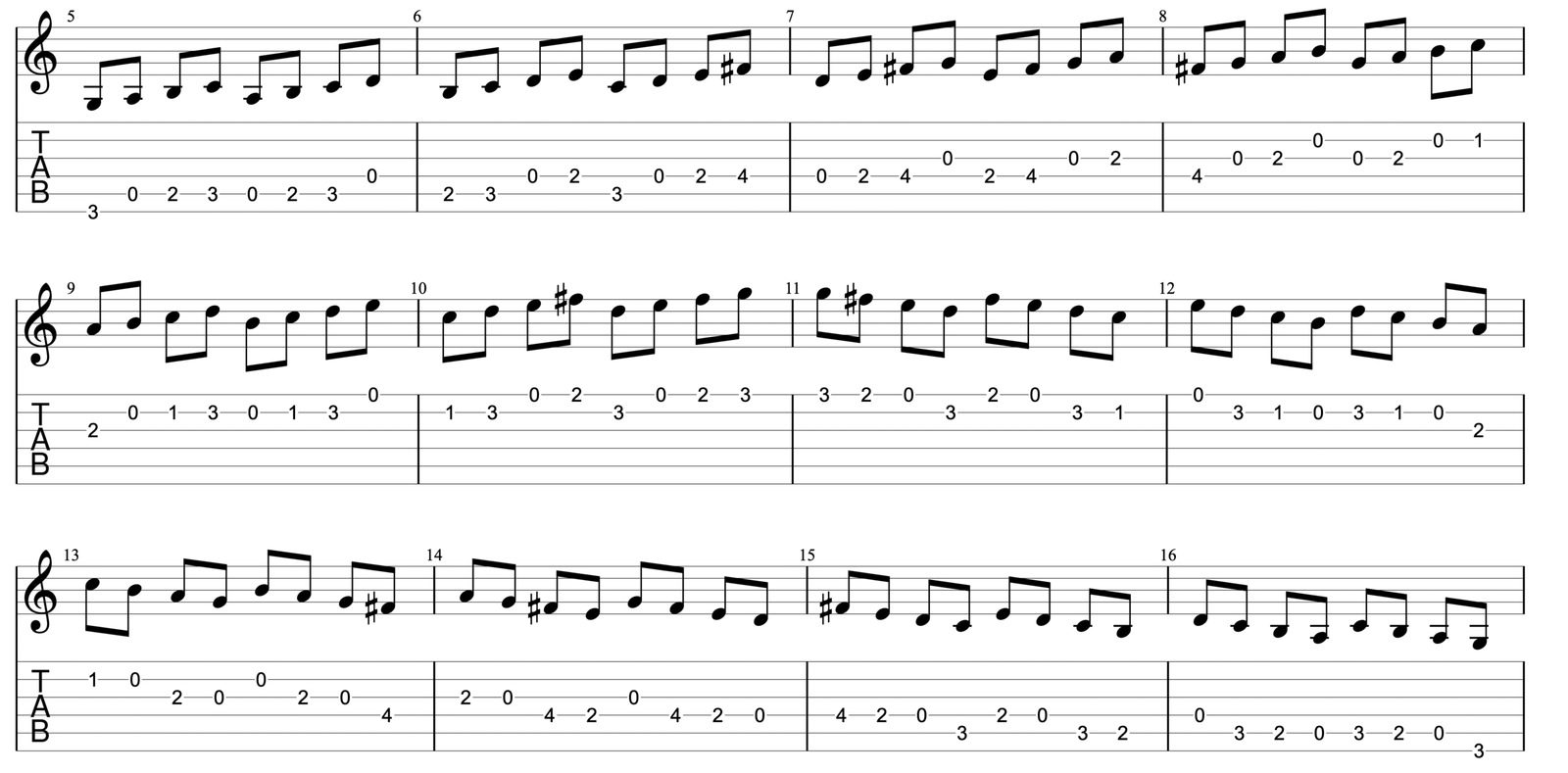
The interesting thing is that once you combine these drills together and loop them with a drum groove and a G drone underneath, it stops feeling like “running scales” and starts feeling much more like actual music practice.
That’s really the goal. Not becoming good at exercises — but becoming more comfortable playing the guitar.
If you’d rather work through this drill routine with me talking you through it, I’ve got the full video walkthrough on YouTube — same three drills, plus a play-along section so you can loop it straight into your own warm-up:
Give it a run before your next practice session and see how it feels once the drills start linking together.
0 Comments